Patios & Outdoor Living
Somewhere to sit, cook and light a fire once the sun is off the water.
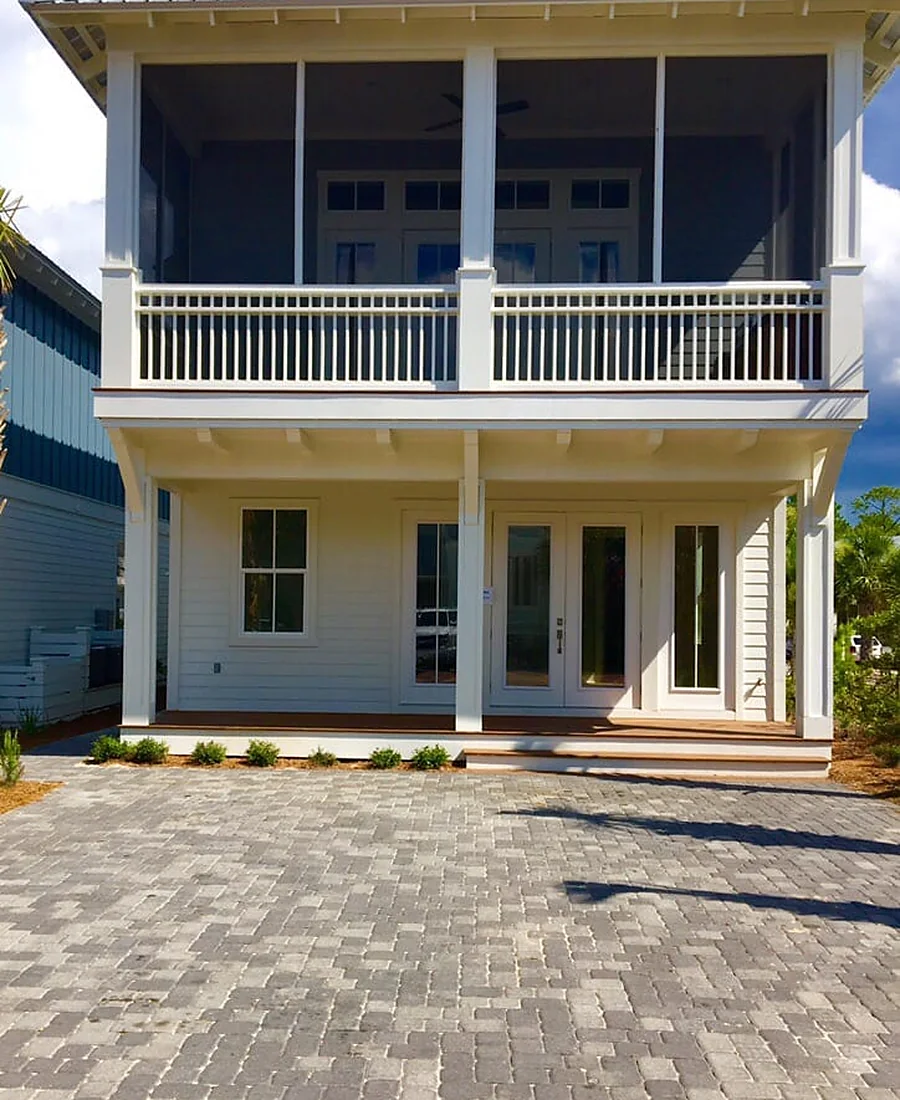
Paver Patios
The room you did not have to build walls for.
Sized around the furniture that is actually going on it, not around a rectangle.
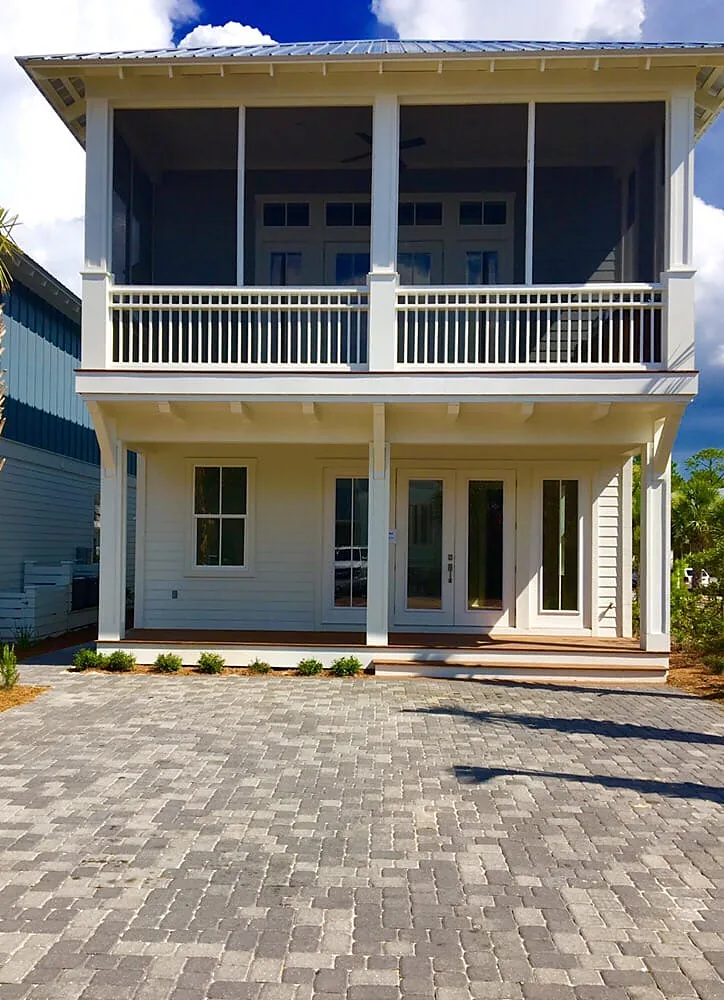
What gets decided before laying starts
- Size taken from the furniture, with room to push a chair back
- Fall set away from the house, never toward it
- Where a seat wall or a fire feature sits, before the field is laid
- Whether a medallion or a banded inset is going in the middle
Field patterns for a patio
A patio carries no vehicle load, so the choice here is about how the space reads rather than about interlock.
Mixed sizes in a repeat. The busiest of the four, and the most forgiving on a large open area.
Outdoor Kitchens
A grill that is part of the house, not parked beside it.
Block and stone counters built around your appliances, with the runs left in for power.
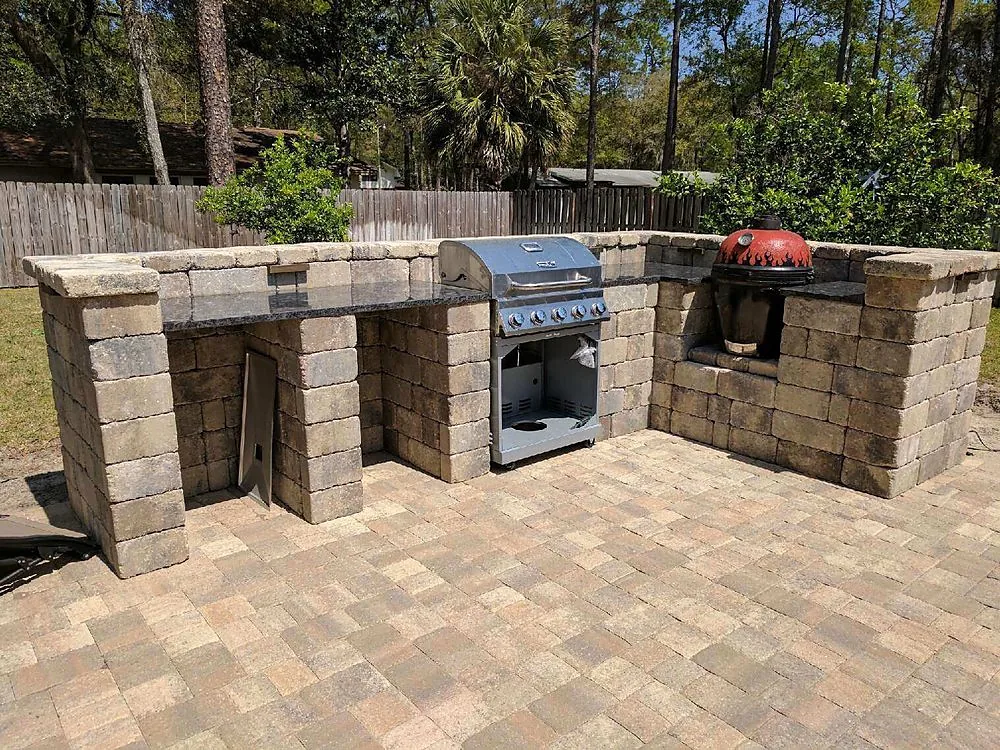
What to settle before block goes down
- The exact grill, cooker or door being built in
- Which side the prep run goes, and how long it needs to be
- Whether gas, power and water are coming to it
- Counter height, set to who actually cooks on it
What is going in yours
Tick what you want built in. This is a list to hand over on the visit, not a specification and not a price.
Fire Pits & Fire Features
The reason anybody stays outside after nine.
Round or square, gas or wood, set at the height you can actually rest a glass on.
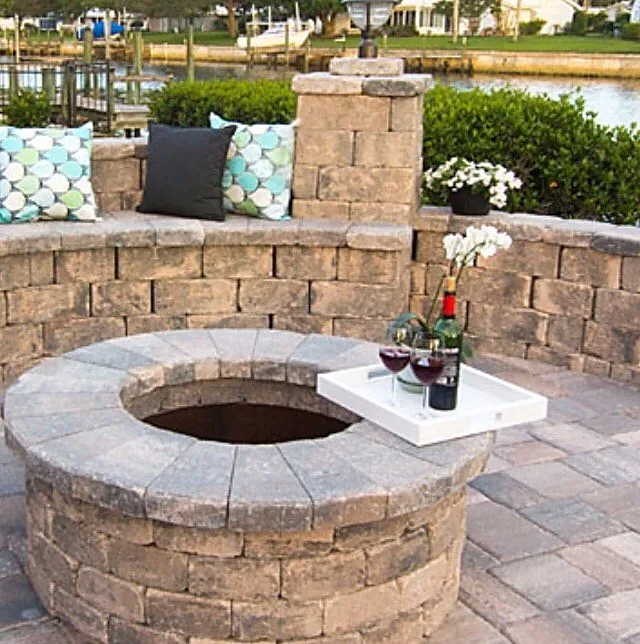
What gets planned around it
- Clear space around the pit for chairs, set back from the rim
- A seat wall where fixed seating makes more sense than furniture
- Cap height chosen so a glass can rest on it
- Position taken from where the wind usually comes from
Wood or gas
Neither is the right answer. They suit different households, and the choice changes the build.
Wood burning
- The fire people picture when they ask for a fire pit
- No gas run, so the build is simpler
- Costs nothing to run once it is built
- Smoke follows whoever moves
- Somewhere to keep wood dry
- Ash to clear out
- Local burn rules can apply
Gas
- Lit and out in seconds
- No smoke and no ash
- Easier to sit close to
- Simpler where burning is restricted
- A gas line has to reach the position
- Less heat than a wood fire
- More to go wrong mechanically
Solid marks are the case for it, gray marks the cost of it. Both are real; which one wins depends on the property.
Pergolas & Pavilions
Shade you can sit under in August.
Posted off the paving, so the structure and the surface are one job.
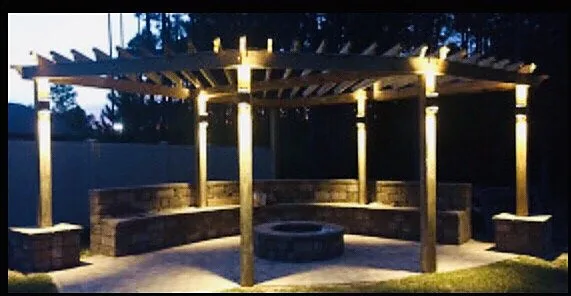
What has to be decided early
- Post positions, set before the base is closed up
- Footing depth, taken from the structure and the ground
- Whether it attaches to the house or stands free
- Whether lighting or fans are going in, and the routes for them
Attached or freestanding
Attached to the house
- Reads as an extension of the building
- One less run of posts in the space
- Shelters the door it covers
- Has to be fixed and flashed into the wall properly
- Ties the roof line to the house roof line
- Harder to change later
Freestanding
- Goes wherever the shade is actually wanted
- No fixing into the building
- Can sit out over a pool deck or a fire pit
- Needs posts on all corners
- Takes more floor area
- Reads as a separate structure, for better or worse
Solid marks are the case for it, gray marks the cost of it. Both are real; which one wins depends on the property.
Questions
Questions people actually ask.
Paver Patios
Which way does the water go?
Away from the house, always. A patio laid flat holds water against the wall it is built up to, and that is a problem that shows up indoors.
Can a fire pit or a seat wall be added later?
It is possible but it means lifting the field where it lands. Deciding before the pavers go down is considerably cheaper and the joint lines end up where they should be.
How close to the pool can a patio run?
That runs into deck and coping detail, which is its own trade here. Raise both together on the visit so the two surfaces are planned as one.
Outdoor Kitchens
Can it match my patio?
Usually. The counter face is often built in a block or stone that relates to the paving it stands on, which is what stops the kitchen reading as a separate object.
Who runs the gas and the power?
That is a licensed trade question, and it should be settled on the visit rather than assumed. What matters for the masonry is that the routes are known before anything is built over them.
Will the stone stain?
Anything near cooking will see grease. It is worth asking what the counter surface is and how it is sealed before choosing it, because the maintenance differs a lot between materials.
Fire Pits & Fire Features
How far from the house does it need to be?
Far enough that smoke and heat are not an issue, and within whatever your jurisdiction requires. Get the local answer on the visit rather than working from a general number.
Round or square?
Round seats people evenly and everyone faces the fire. Square sits more naturally against a rectangular patio or a straight seat wall. Their own work includes both.
Can a seat wall be added around it?
That is a normal pairing and it is easier done at the same time, because the wall base and the patio base are the same excavation.
Pergolas & Pavilions
Pergola or pavilion?
An open rafter pergola gives broken shade that moves through the day. A pavilion has a solid roof, so it shades one spot completely and keeps rain off. They build both, and the choice usually comes down to whether you want the sky or the shelter.
Can it go over the pool deck?
Their own work includes a roofed pavilion built on a paver deck at the water's edge, so a structure on paving beside water is a build they do. Where it can sit depends on your deck and your setbacks.
What about wind?
It is the reason footings matter here. Raise it on the visit and ask what the posts are going into, because that is the part that carries the load.
The rest of the list
Patios & Outdoor Living
Somewhere to sit, cook and light a fire once the sun is off the water. Send photos of the space and someone will come and look at it.